
Matcha Industry Report is Ooika's monthly coverage of the Japanese tea industry, specifically Matcha. Join our newsletter here to keep up to date.
Japan's Ministry of Agriculture, Forestry and Fisheries (MAFF) regularly publishes 茶をめぐる情勢, its official overview of the state of Japanese tea. The July 2026 edition is one of the clearest snapshots yet of an industry being reshaped by Matcha.
Fewer farms, a new number one region, a rush toward Tencha, and record exports. Here's what the numbers say.
1. The Scale of Japanese Tea Today
In 2025, Japan had 33,400 hectares of tea fields and produced 75,100 tonnes of Aracha, the crude tea that farmers and processors sell before final refining.
The output value of Aracha was ¥76.3 billion in 2024.
Both cultivated area and production have been slowly shrinking for years. Production has hovered in the 70,000-tonne range, but the mix of what's being produced has changed dramatically.
2. Kagoshima Is Now Number One
The biggest headline is geographic. In 2024, Kagoshima produced more Aracha than Shizuoka for the first time since records began in 1959, as reported by the Yomiuri Shimbun and the Asahi Shimbun. It held the top spot again in 2025.
Area vs. Output
Shizuoka still has the most tea fields, at 11,600 hectares, against Kagoshima's 8,040. Mie (2,580 ha) and Kyoto (1,510 ha) follow.
But in 2025 Kagoshima produced 30,000 tonnes of Aracha, compared with Shizuoka's 24,100.
Why Kagoshima Pulled Ahead
Kagoshima's fields are broad and flat. 99.0% of its tea fields can be harvested with riding-type plucking machines, compared with 96.9% in Shizuoka and 78.6% nationwide.
Its farms are also getting bigger. The average cultivated area per farm in Kagoshima grew from 2.1 hectares in 2005 to 3.6 hectares in 2020, the largest of any major region.
Kyoto is the opposite case. Only 22.9% of its tea fields are suited to riding-type pluckers, and 85.1% of its fields sit in hilly or mountainous areas. That's part of why Uji tea remains small-scale, labor-intensive, and expensive.
We covered how these regions opened the 2026 season in our April 2026 Matcha Industry Report.
3. From Sencha to Tencha
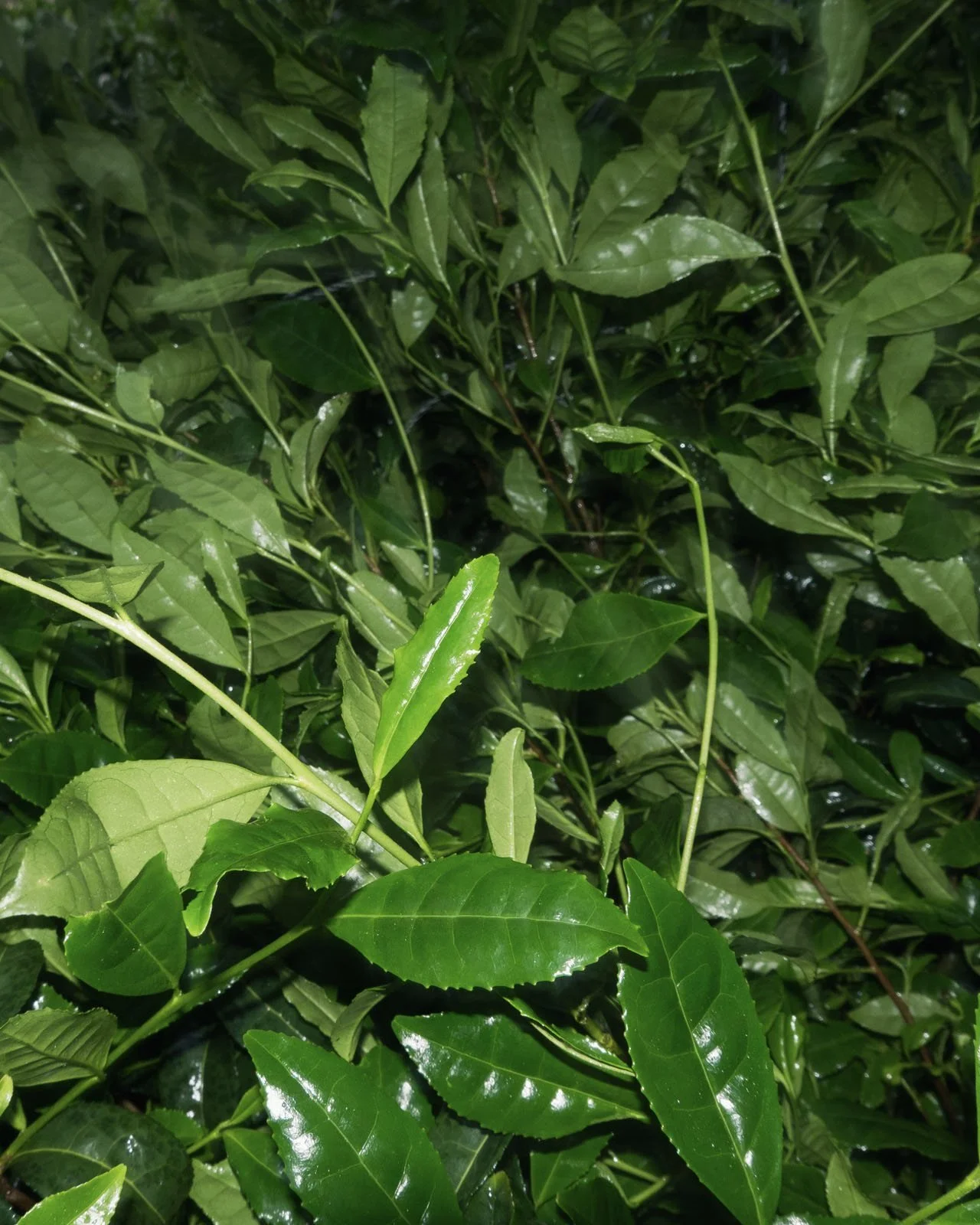
Sencha is still Japan's main tea. In 2025 it made up 48.1% of production.
Tencha, the leaf that is stone-milled into Matcha, made up 8.6%. Gyokuro was 1.0%, Kabusecha 2.0%, and Tamaryokucha 2.0%.
That 8.6% is the fastest-moving number in Japanese tea. Tencha production reached 6,278 tonnes in 2025, about 3.2 times the 2014 level.
Fewer First Harvest Teas
At the same time, the profile of the harvest is changing. First harvest (Ichibancha) production, which mostly goes to loose-leaf tea, fell from 40,682 tonnes in 2008 to 25,213 tonnes in 2025.
Meanwhile, cheaper fourth-harvest and autumn/winter teas, used largely for bottled drinks, have grown.
4. Why Farmers Are Switching to Tencha
The short answer is price. MAFF's 2025 average Aracha prices per kilogram:
Sencha: ¥1,746
Kabusecha: ¥2,387
Gyokuro: ¥3,699
Tencha: ¥8,562
Tencha sold for roughly 4.9 times the price of Sencha. First harvest Tencha averaged ¥10,030/kg.
And 2026 went higher still. MAFF reports that first harvest Tencha prices roughly doubled in Kagoshima and rose about 70% in Shizuoka compared with the year before.
The Catch
Converting isn't simple. Tencha requires shading, dedicated Tencha processing lines, and serious capital. As Matcha Wire reports, Shizuoka's dominant Yabukita cultivar is also less suited to high-quality Tencha.
And every field that switches means less Sencha. That's a big reason Japanese tea prices are rising across the board, not just for Matcha.
5. Japan Is Drinking Less Loose-Leaf Tea
At home, the trend runs the other way. According to the household survey MAFF cites, leaf tea consumption per household fell from 937 grams in 2009 to 593 grams in 2025.
Spending on leaf tea dropped from ¥4,780 to ¥3,153 per household over the same period. Spending on tea beverages rose from ¥5,700 to ¥8,962.
In other words, Japan still drinks tea. It just increasingly buys it in a bottle.
Age matters too. Younger households spend far less on leaf tea than older ones, which points to further decline ahead.
6. The Export Boom
Overseas, Japanese tea has never been more popular. In 2025, Japan exported 12,612 tonnes of green tea worth ¥72.1 billion, a record.
That's roughly double the ¥36.4 billion of 2024, which was itself a record we covered in 11 Matcha Shortage Facts.
Where It Goes
The United States is by far the largest market. It took 4,431 tonnes worth ¥29.3 billion in 2025, about 35% of export volume.
The EU and UK together took 2,393 tonnes worth ¥18.6 billion. Taiwan, ASEAN countries, and Canada are also among the top destinations.
The momentum hasn't slowed. Exports from January to May 2026 reached ¥40.2 billion, ahead of the previous year's pace.
7. Powdered Tea Drives Exports
Most of that growth is Matcha. Powdered tea, the customs category that includes Matcha, made up 69% of export volume and 84% of export value in 2025.
Powdered tea exported at an average of ¥6,927/kg, about 2.3 times the ¥3,007/kg for other green tea.
This is the demand that is pulling Japanese fields toward Tencha, and the reason Japanese retailers have faced shipment caps. Matcha Wire covered how the boom is squeezing domestic supply, down to Meiji discontinuing a Matcha ice cream.
8. Organic Tea Matters for Export
Organic is a big part of the export story. In 2025, 62.8% of green tea exports to the United States and 63.6% of exports to the EU and UK were organic.
These shipments move under organic equivalence arrangements, which let Japanese organic certification be recognized abroad. For producers targeting the US and Europe, organic certification is increasingly a requirement rather than a bonus.
9. A Geographical Indication for "Japanese Tea"
On July 10, 2026, "Japanese Tea" (日本茶) was registered as a Geographical Indication. It covers green tea grown and processed in Japan.
The timing isn't accidental. MAFF's report notes that tea made in China is being sold overseas as "Uji Matcha." The GI gives Japanese producers a legal tool to push back.
We explained what the GI means in A Meaningful Step Toward Safeguarding Authentic Japanese Tea.
10. The Challenges Ahead
For all the export success, the foundations of Japanese tea are under real strain.
Aging Farmers, Fewer Farms
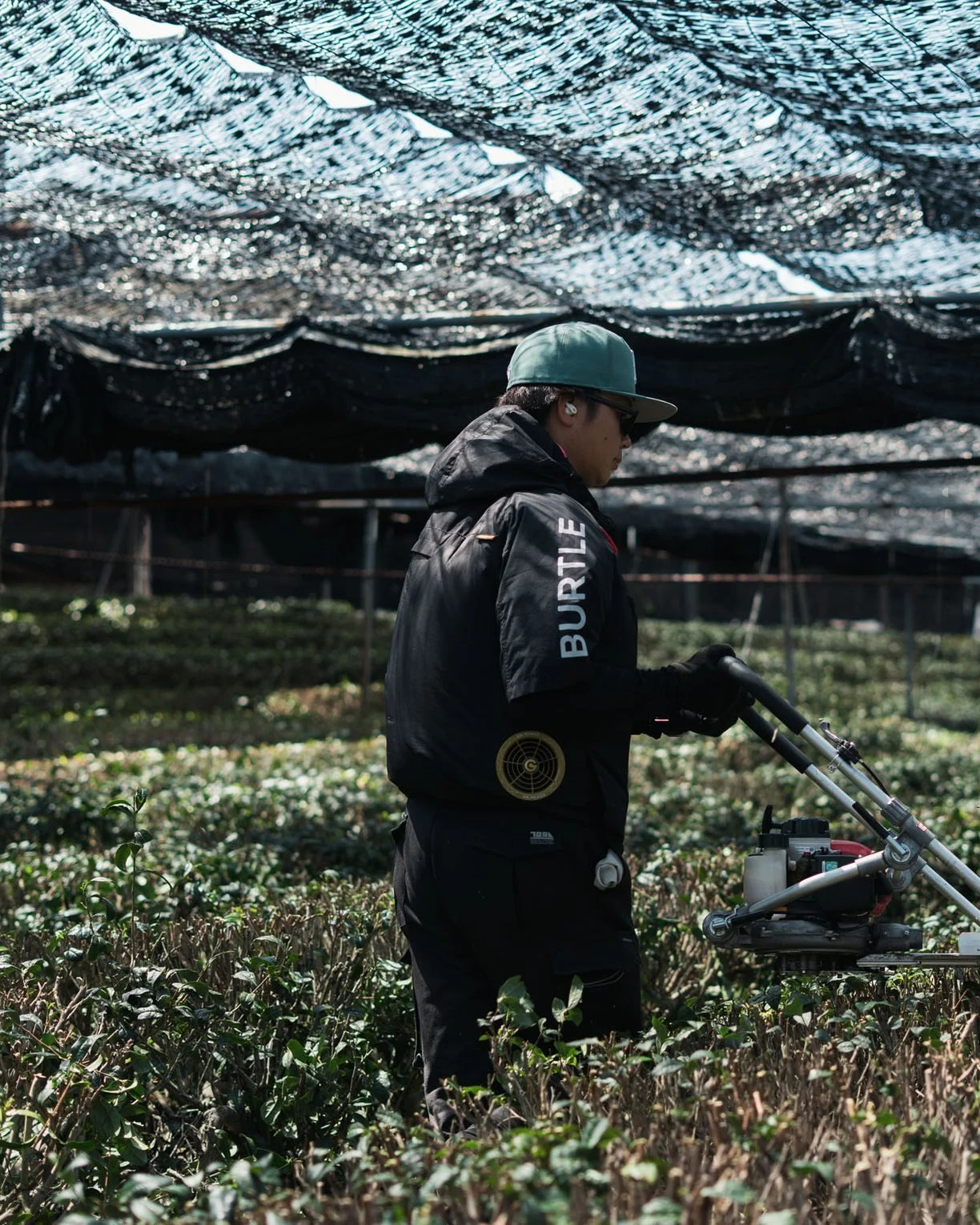
The share of tea workers aged 65 or older rose from 53% in 2005 to 62% in 2020. The number of tea farms fell from 53,687 in 2000 to 12,325 in 2020.
Aging Fields
About 40% of tea fields (39.4%) have bushes more than 30 years old, raising concerns about falling yield and quality. MAFF subsidizes replanting, including support for the years before a replanted field can be harvested.
Difficult Terrain and Weather
About 40% of tea fields nationwide are in hilly or mountainous areas, where machines struggle. MAFF also lists frost, cold damage and volcanic ash fall, alongside falling sale prices, as key risks for tea farmers.
Costs
Fuel and fertilizer costs have pushed MAFF to maintain safety-net programs. Even so, uptake of income insurance among tea farmers is only 48.5%.
The Government's Response
MAFF is promoting smart agriculture, replanting and new planting, and conversion to Tencha, organic, and export-oriented production. Its new target is ¥81 billion in tea exports by 2030.
With 2025 exports already at ¥72.1 billion, far beyond the previous 2025 target of ¥31.2 billion, that goal looks well within reach. The harder question is whether Japan can grow enough tea to meet it.
What It Means
Japanese tea is splitting in two. Overseas, Matcha demand is at a record and still growing. At home, loose-leaf tea is declining, farms are disappearing, and Sencha is getting more expensive as fields switch to Tencha.
How Japan balances those two forces will shape the Matcha we all drink for years to come. For a closer look at how this is playing out in Kyoto, read Beyond Matcha: Why All Japanese Tea Prices Are Rising.
At Ooika, we'll keep following these changes in our monthly Matcha Industry Report.