
Matcha Industry Report - April 2026
Matcha Industry Report is Ooika's monthly coverage of the Japanese tea industry, specifically Matcha. Join our newsletter here to keep up to date.
About this Report
The new 2026 tea harvest has begun across Japan, as the tea harvests have continued. The first day of the auction is significant as it “sets the bar” for what prices we can expect for the upcoming season. After the first day of auctions, the prices will settle as the auctions continue throughout the month.
As we’ll see, prices are higher this year at auction, but perhaps not unexpectedly. We’ll be examining a few of the auctions across many tea-producing prefectures.
Kagoshima
Japan’s earliest 2026 tea auction was held on April 6 at the prefectural tea market in Kagoshima City. The highest bid reached ¥30,000/kg, up ¥8,692/kg from the previous year. This is also the highest price per kilogram since 1989, the beginning of the Heisei era. The highest price is dramatic, but the average price across all lots is perhaps a more important metric.
The average price also climbed by ¥2,436/kg to ¥6,573/kg, reflecting what the Kagoshima Prefecture Tea Industry Council described as “a very strong start.” This has been driven by growing demand amid nationwide supply concerns.
The momentum means that Kagoshima Prefecture has maintained its position as Japan’s top producer of Aracha (unprocessed tea) for the second consecutive year. According to the JA Prefectural Economic Federation, this season’s crop developed smoothly with minimal cold-weather impact, sufficient rainfall, no frost damage, and excellent overall quality. Kagoshima’s 2025 aracha production reached 30,000 tons, an 11% increase from the previous year. [1]
Miyazaki
The first auction of new tea from Miyazaki Prefecture this year was held on April 14th in Miyazaki City, where prices reached record highs. This season, favorable weather conditions with minimal frost damage resulted in high-quality tea with excellent aroma, color, and rich umami content. The highest price at the opening auction reached ¥25,555/kg, and the average price also marked the highest level in the past decade. [2]
Yame
The first auction marking the start of the new Yame tea season was held on April 18 in Yame City, where the average price reached ¥10,851/kg, up 15.8% from the previous year. The price surpassed ¥10,000/kg for the first time since 2011, marking a 15-year high driven by soaring tea prices amid the global Matcha boom.
According to the JA Tea Trading Center, rising prices for Tencha—the raw material for Matcha—have encouraged more producers to shift the varieties they cultivate and ship, resulting in a decline in the previously dominant sencha. Meanwhile an overall shortage of tea leaves last year further accelerated price increases, pushing the annual average price up by 30% year-on-year.
At the opening auction, just over 1.4 tons of tea across five cultivars were shipped, approximately 1.8 times more than the previous year, as buyers from 27 tea companies carefully evaluated the quality before placing their bids. [3]
Shizuoka
The first auction of new tea was held on April 20 at the Shizuoka Tea Market, where the highest price reached ¥1.18 million per kg for “Takane no Hana,” produced by the Ryogouchi Tea Producers’ Association, surpassing last year’s peak of ¥880,000/kg.
Founded 70 years ago as Japan’s first tea market, the Shizuoka Tea Market also introduced a new brokerage system in which brokers mediate negotiations directly between producers and tea merchants to help establish more appropriate pricing following the sharp decline in first-flush tea prices in 2024.
In addition, 35 lots were listed through the electronic bidding system, with 12 successfully sold, while the highest electronic bid reached 1.08 million yen per kilogram for organic hand-rolled tea produced by Yamahiraen.[4]
Uji
The first Uji tea auction of the year was held on April 24, where hand-rolled sencha produced in Wazuka Town sold for a record-high price of ¥333,339/kg.
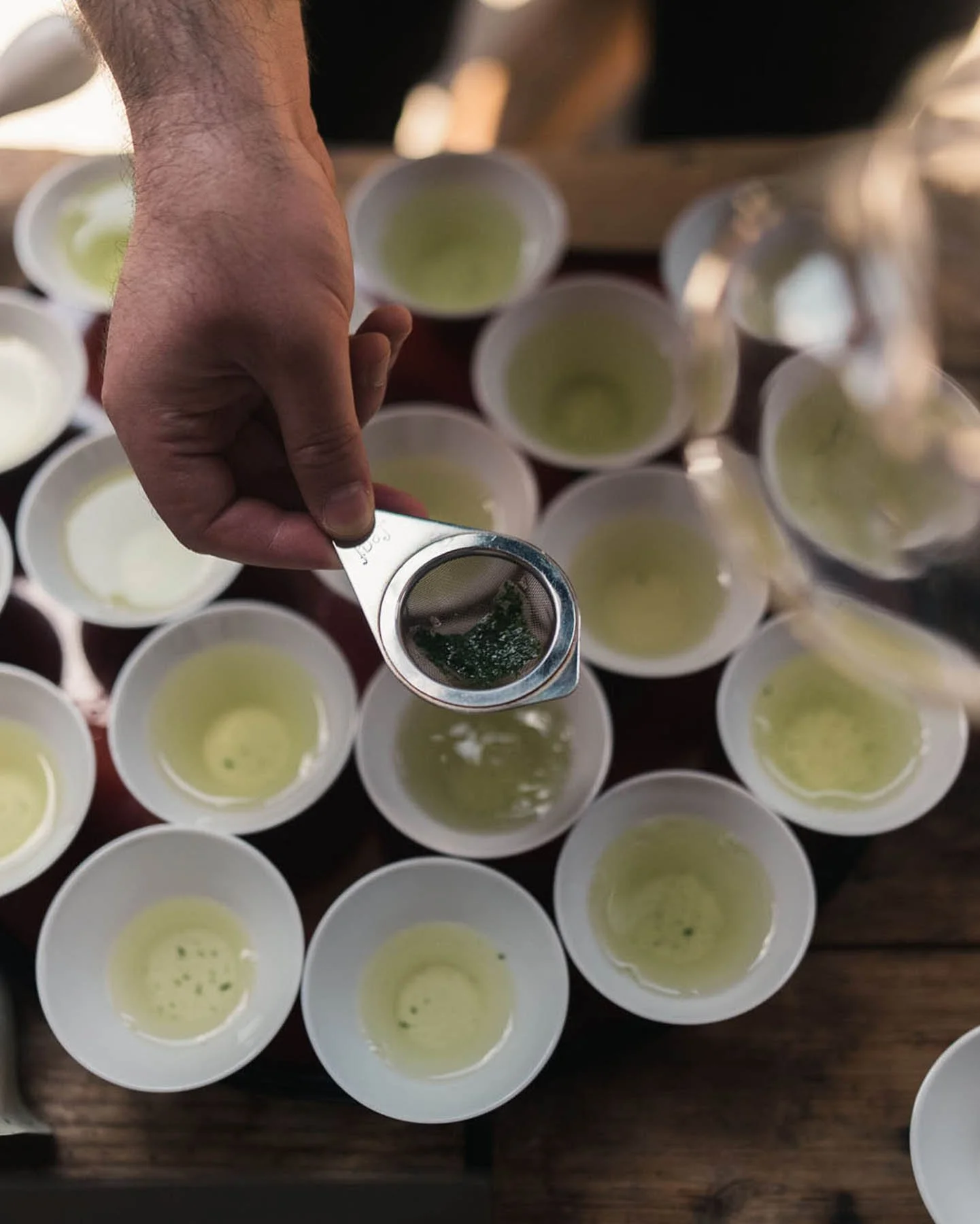
Around 150 participants from 80 tea companies carefully examined the tea leaves displayed on tables, assessing their color and aroma by hand before placing bids. According to Yoshida Toshikazu, Chairman of the Kyoto Prefecture Tea Production Council, although there had been concerns about rainfall, sufficient rain in April and minimal frost damage allowed the tea to grow well.
A total of 119 lots (115 of sencha and 4 of gyokuro), amounting to 1,125.7 kilograms, were submitted from Wazuka Town, Minamiyamashiro Village, Ujitawara Town, Uji City, and Kizugawa City, with the average price reaching ¥20,879/kg, up ¥3,781 from the previous year.[5]
Kumamoto
The first auction of the season from Kumamoto Prefecture was held on April 24 at the JA Kumamoto Economic Federation Tea Auction Hall, where the average winning price reached ¥4,883/kg, up 1,333 yen from the previous year and marking the highest level in the past five years.
The top price rose to ¥101,111/kg, exceeding last year’s ¥80,000/kg, as growing global demand for Matcha continued to drive stronger tea prices. Favorable weather conditions, including warm temperatures, sufficient rainfall, and no frost damage, also contributed to expectations for high-quality tea with rich aroma and umami this season.[6]

Japanese tea prices rose again in 2026, and not just for Matcha. See how Kyoto’s shift to Tencha pushed up Gyokuro, Sencha, and Hojicha prices too.