
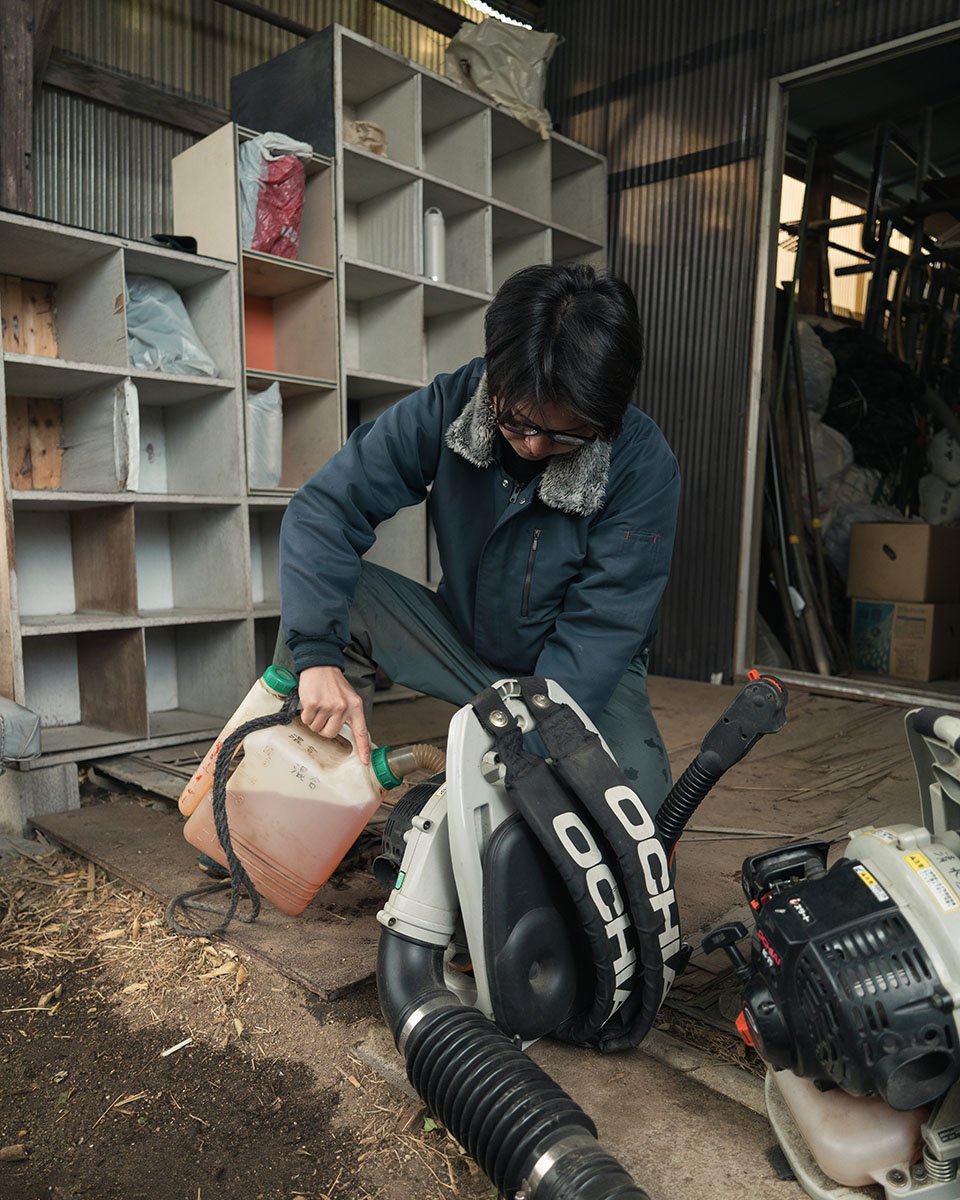
When most people think of tea farming, they imagine the vibrant green harvests of spring. However, for a Tencha farmer, the specialist who grows the leaves destined to become Matcha, they have no real vacation in a year.
The farmers are hard at work laying the foundation for the "Umami" of the coming year, a key feature of fresh Matcha. Here is a look at the vital winter tasks in a Tencha garden.
1 - Sculpting the Garden: Pruning and Maintenance
Winter serves as a critical period for structural maintenance, where farmers capitalize on the dormancy of the tea bushes to perform "re-shaping" without inducing plant stress.
This involves precise pruning to maintain a uniform canopy height. It is an essential step for ensuring synchronized bud burst and consistent leaf quality during the spring harvest.
Beyond the plants themselves, the focus shifts to the ground and sky: farmers clear drainage trenches to prevent root rot in the damp soil while simultaneously prepping frost-protection systems, such as anti-frost fans, to shield delicate branches from sudden temperature drops.
These combined efforts in soil aeration and physical protection ensure the garden remains resilient and ready for the intensive growing season ahead.
2 - "Kangoe": The Winter Gift to the Soil
Crucial to the production of high-quality Matcha is the winter fertilization process known as Kangoe (寒肥), which provides the foundational nutrients required for the tea’s characteristic deep flavor and vibrant color.
By strategically applying organic (as in non-synthetic) slow-release fertilizers during the dormant season, farmers enrich the soil over several months, ensuring a steady supply of nutrients.
These nitrogen-rich blends act as a vital "energy bank" for the plants; when the buds finally wake in the spring, they have immediate access to the fuel necessary to produce the intense umami and signature sweetness that define premium Tencha.
3 - Preparing the "Stage": Shading Infrastructure
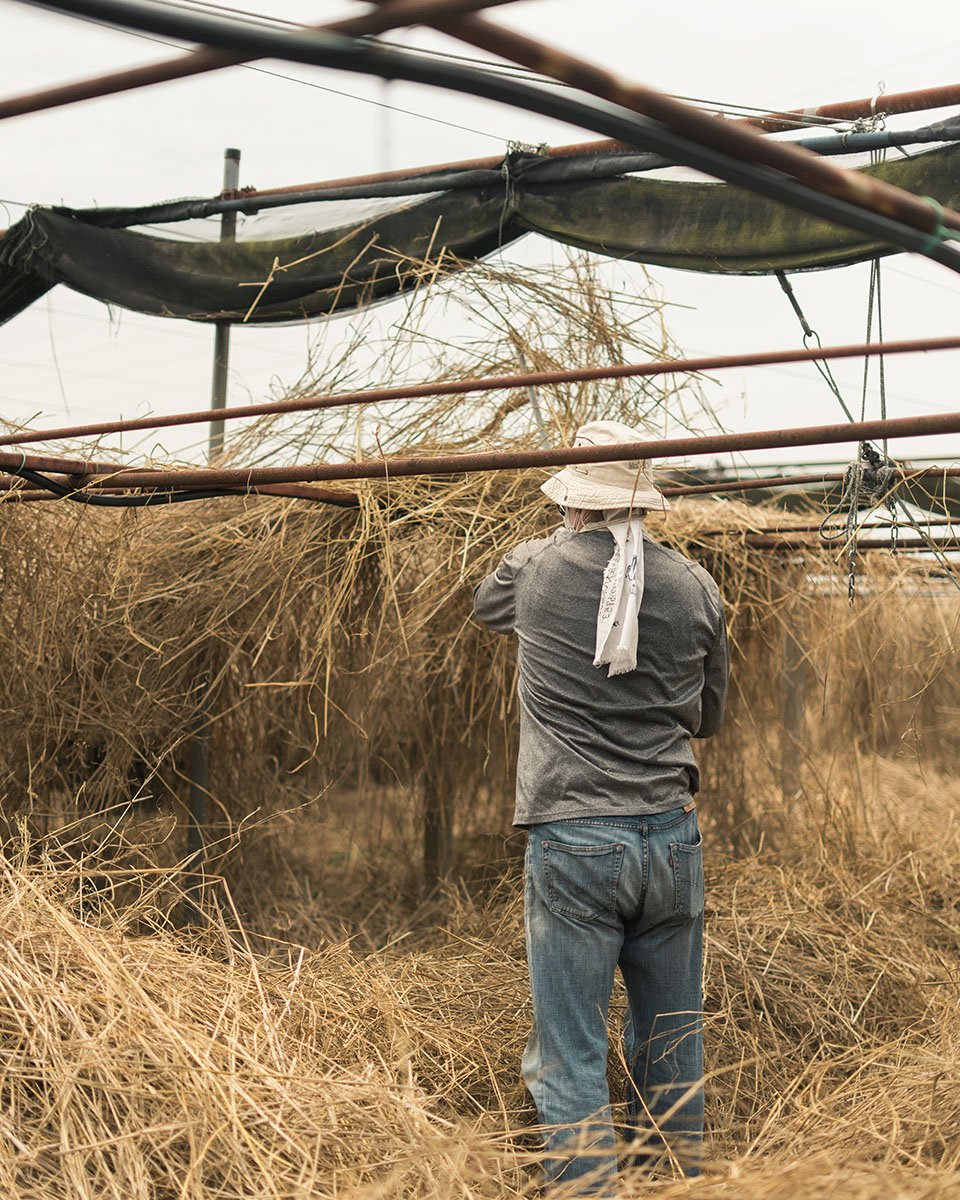
The massive infrastructure required for Matcha shading is a hallmark of Tencha cultivation, and winter is the only window available to ensure these systems are battle-ready. You can learn more about why Matcha is shaded here.
Farmers must meticulously inspect the permanent Tana structures, which are the complex network of metal poles and overhead wires, to guarantee they can support the heavy weight of the covers.
This season is also dedicated to the painstaking repair of black synthetic Kanreisha cloths or traditional straw mats to prevent any unwanted light leaks.
Because the transition to shading must happen with lightning speed once the spring buds appear, this winter maintenance is a high-stakes race against time to eliminate the risk of equipment failure during the critical growth phase.
4 - Deep Cleaning the Factory
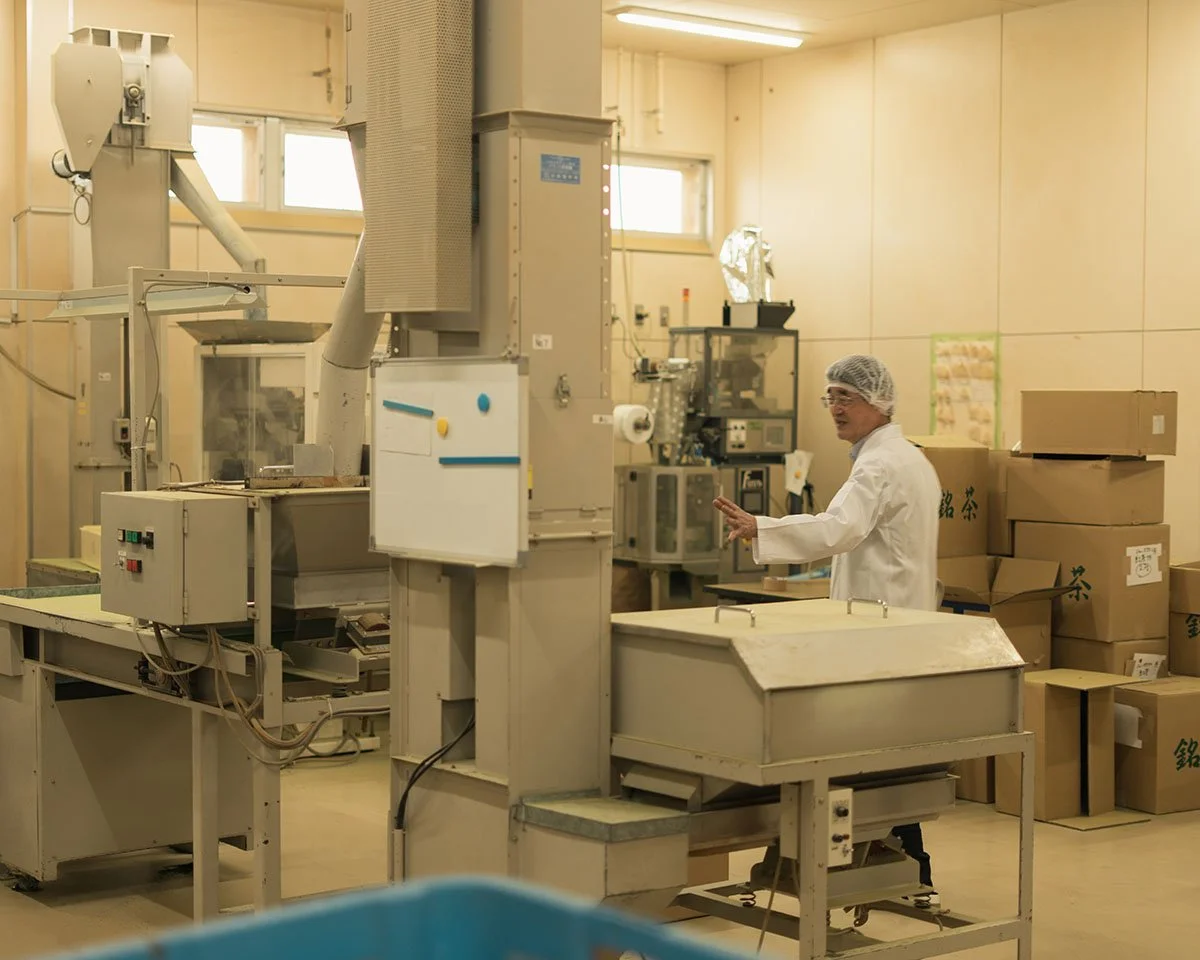
The winter months are also a period of rigorous maintenance for the specialized machinery that defines Tencha production. Farmers perform deep mechanical overhauls on everything from harvesters to tractors, ensuring every moving part is calibrated for the high-intensity spring season.
This maintenance extends into the tea factory, where giant steaming machines and the iconic brick Tencha-ro (drying ovens) undergo meticulous sanitization. By deep cleaning the entire processing line during this downtime, farmers guarantee that the very first batch of the new year remains pristine, free from any residual leaf particles or dust that could compromise the tea's delicate aroma.
5 - The Business of Tea

While the physical labor in the fields slows down, the administrative "heart" of the tea farm beats fastest during the winter months. This is a strategic period where farmers transition from cultivators to entrepreneurs, meticulously managing their remaining inventory to ensure that aged Tencha maintains its peak quality before the new harvest arrives.
It is a season of high-stakes networking, involving frequent consultations with tea brokers and wholesale partners to negotiate pricing and finalize supply contracts for the upcoming year. Beyond the paperwork, this quiet season offers a rare moment for deep reflection; farmers analyze climate data and yield reports from the previous harvest to refine their techniques, setting ambitious sustainability and quality goals that will define the success of the next spring flush.

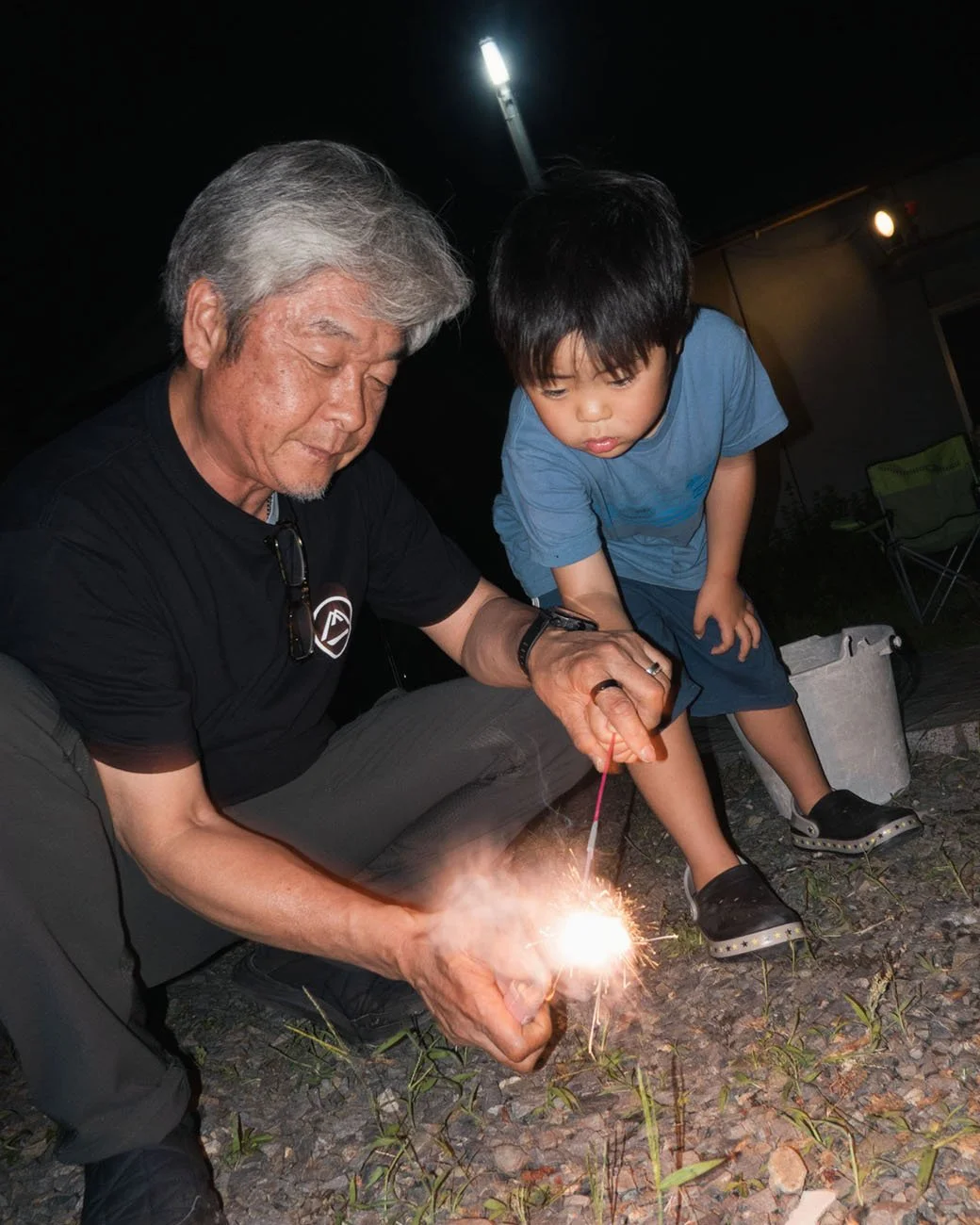
Japanese tea prices hit record highs in 2026. Learn how global Matcha demand drove up first and second harvest prices with Ooika’s Matcha Industry Report.